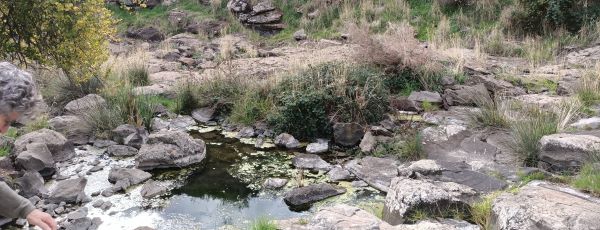
This is what this blog will be, just a collection of things that I have discovered and perhaps found ways to tangle them together.
A WW1 Hero
I have been researching my great uncle Ernest Edward Harridge from Kerang who died in Belgium in World War 1. When my father was born three years later, he was also named Ernest Edward Harridge. We had a large portrait at home, but we did not know much about him. But in 1982 my father received a box of letters and other paraphernalia from Joy Bradstreet (nee Booth). Even then we did not look at this trove in much detail. A few years ago, I started organising them and this year (2024) I have done some digitising and further research.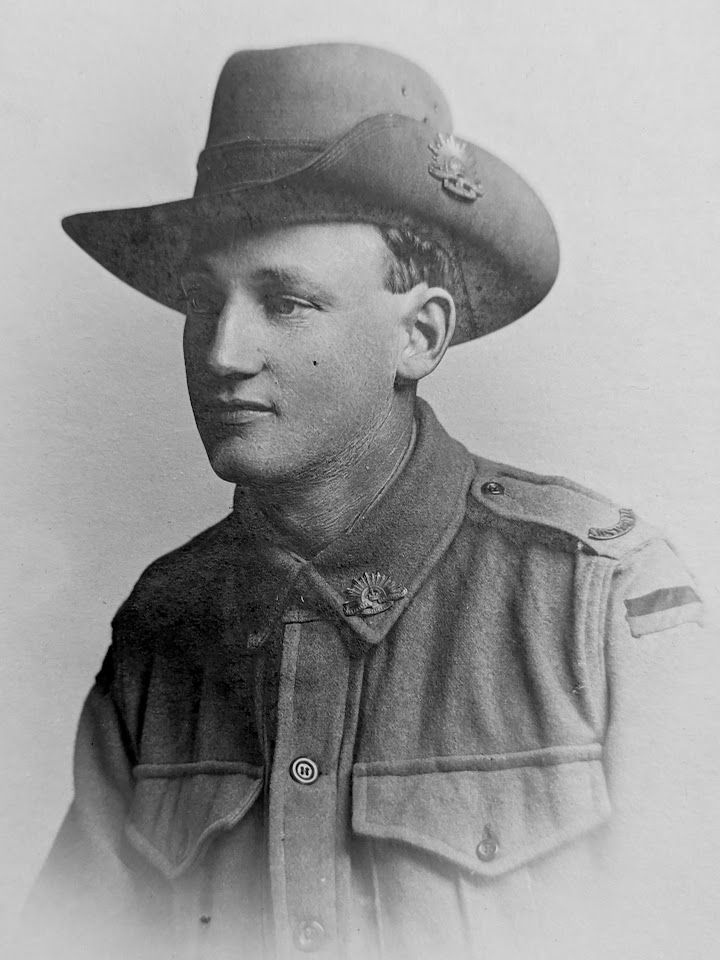
- Born: 19 Oct 1891
- Enlisted: 26 Jul 1915
- Service number: 3851
- Battalion: 5th Battalion, A Company
- Embarked: 23 Nov 1915
- Died: 20 Sep 1917 near Ypers (hit by a shell)
- Buried: Hooge Crater Cemetery, plot 9A, G15
- Enlistment and embarkation
- Travels
- France
- The Battle of Menin Road
- Waiting for news
- Burial and reburial
Cha or Tea?
There is an interesting pattern that the word 'tea’ shows across the globe. With very minor exceptions, the world has only two words for tea. One is like the English tea (e.g. thé in French, té in Spanish, and tee in Afrikaans). The other one is some variations of cha found in Arabic chay and Hindi cha for example. The Chinese character for tea, 茶, is pronounced differently by different varieties of Chinese, though it is written the same in them all. In today’s Mandarin, it is chá. But in the Min Nan variety of Chinese, spoken in the coastal province of Fujian, the character is pronounced te. The key word here is “coastal.” The Dutch East India Company’s expansive tea importation into Europe gave us the French thé, the German Tee, and the English tea etc.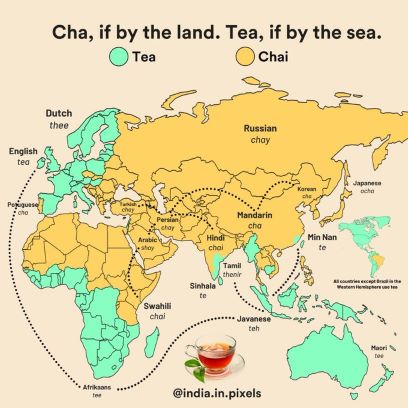
My Facebook friend Helen Hynes related this conversation with her son.
Me:'Here's your toast Stan!'
Stan: 'T-t-t ... toast starts with t!'
Me: 'And what's the name of the letter that makes that sound?'
Sterling: 'Here's a hint. What does Mum drink sometimes, Stan?'
Stan: 'Wine.'
A train trip to remember.
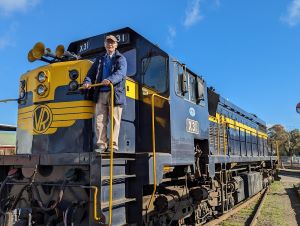 My friend Peter Bau is a train buff so he decided to celebrate his seventieth birthday by chartering a train, and inviting friends and family for the trip.
I offered to produce a booklet and I did so by assembling a web page which I could print as a booklet.
My friend Peter Bau is a train buff so he decided to celebrate his seventieth birthday by chartering a train, and inviting friends and family for the trip.
I offered to produce a booklet and I did so by assembling a web page which I could print as a booklet.
One reason for this is that I am more at home making a web page than for instance a Word document. Another reason is that it can then be a web resource, adjusting later with corrections, additions etc and can even later be used to have memories of the day. You can see the web version of this booklet here.
Stone Jug
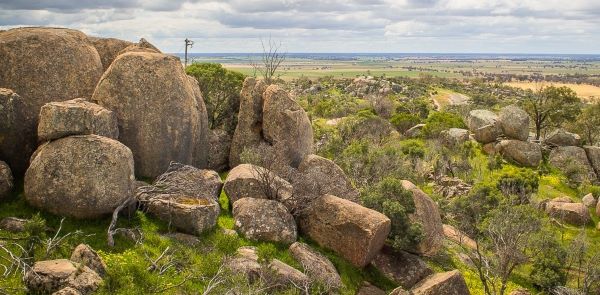
In Central Victoria there is a tributary of the Campaspe River called Stone Jug Creek, There is also Stone Jug Lane. There is no clear indication of how it got this name, but here is a possibility.
Stone Jug was the old slang term for a prison dating from 1621. The shorter form "jug" came in the mid 1800s. See Green's Dictionary of Slang
In Charles Dickens' Oliver Twist there is a good smattering of the jargon of thieves and pickpockets. Charley Bates, even younger than Oliver Twist, is upset when it seems that the Artful Dodger will be sent to Newgate prison. Oliver tries to console him:
He shall be kept in the Stone Jug, Charley, like a gentleman. Like a gentleman! With his beer every day, and money in his pocket to pitch and toss with, if he can't spend it.
An early settler wrote a book published in 1872 called Glimpses of Life in Victoria by "a Resident" (later identified as John Hunter Kerr or possibly his wife). He described the gold rush and bushranging and much more. Here is how he described the Korong diggings.
Great fantastic-shaped boulders of immense weight lie tossed about and heaped upon each other in grotesque confusion; left there as relics of some mighty convulsion of the earth, in ages gone by, when, perchance the fair continent of Australia was yet in the course of upheaval from its ocean bed. Little, curiously hollowed-out caves are found here and there among the rocks, and a profusion of bright and varied wild-flowers and ferns cluster and bloom among the rugged and hoary monuments of nature's strange and hidden force. One immense block of stone, grey, worn, and furrowed, is completely hollowed out inside, and as I pointed it out to the officers, some one suggested, professionally, that in the absence of country prisons it might be easily converted into a "stone jug."